


Furnace Prices Review: Types, Taxes and Cost
Your go-to resource on furnace prices for all major brands and types. Includes info on HVAC contractors, free quotes, and furnace repair and replacement.
Quality Services
Where do you need services?
Where do you need services?
Featured in

Navigation: Saving through energy efficiency | Bigger isn't always better, but furnace size does matter | Energy tax credits to consider | Furnace prices | Energy savings calculator | Get multiple quotes from HVAC contractors for furnace installation
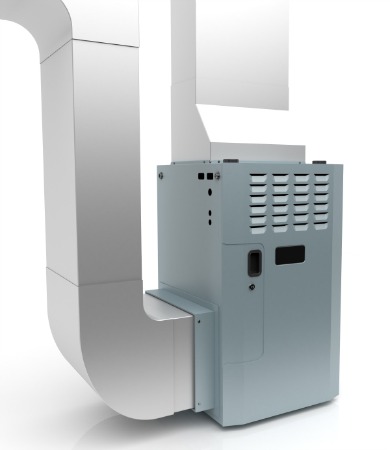
When it’s time to replace a furnace, many homeowners fall into the trap of overpaying for a low-cost, potentially low quality furnace. The initial purchase price of any furnace is really only a small part of the equation.
Choosing a new furnace from the multitude options out there can be a challenging, but a smart investment in heating can save you from burning through your wallet. The best part of selecting the right furnace is that if you pick the right one, it may actually pay you back over its life.
Savvy buyers consider other factors that can determine long-term savings, including:
- Type of furnace.
- Size of furnace.
- Energy efficiency.
A willingness to pay for a higher "priced" furnace can translate into saving more money down the road.
Furnaces prices can differ between two similar furnaces for numerous and complex reasons. So before you dive into a pile of dense textbooks or sales brochures to decipher the differences, know that these other factors can be a simpler and better guide when pinpointing the best replacement furnace for your home.
For prices and performance overviews on specific brands and models, check out our guides on:
If you're looking for a general overview of furnace prices, scroll down the bottom of the page.
Saving through energy efficiency
Efficiency is a critical performance measurement of any furnace you're considering for your home. Each furnace you review will be given an efficiency rating known as an Annual Fuel Utilization Efficiency rating or AFUE.
The technical considerations going into measuring AFUE were established and are routinely updated by the American Society of Heating, Refrigeration and Air-Conditioning Engineers (ASHRE). ASHRE is the recognized source for technical specifications used by architect and engineers in designing and measuring HVAC systems for both residential and commercial use.
In general, look for furnaces in your price range with higher AFUE ratings. To put it simply, your AFUE rating scores the amount of heat generated for the amount of energy used. For example, if you have a furnace with an AFUE rating of 90, you can expect it to generate 90 units of heat for every 100 unit of energy it consumes.
A higher efficiency rating is more environmentally friendly and, depending on your energy usage, usually saves you more money over the course of a furnace’s life, which is generally about 20 years.
It is federally required that all furnaces manufactured today must have at least an AFUE rating of 78 percent.
Energy Star suggests different ratings to look for based on furnace type and your regional location in the U.S.:
- Gas furnaces: If you live in the North, then an AFUE of 95 percent or higher. If you live in the South, seek gas furnaces with a 90 percent AFUE rating or higher.
- Oil furnaces: A lower AFUE rating of 85 percent or higher works for oil furnaces.
- Gas and oil furnaces: You’ll also want to look at other product features when taking into account energy efficiency. For instance, air leakage and the furnace fan efficiency should be 2 percent or less.
Furnace fuel costs fluctuate depending on location and other factors, but as a general rule of thumb:
- Electricity is more expensive than oil.
- Oil is more expensive than natural gas.
- Natural gas is the least expensive of the three.
If you are replacing your old furnace with one that uses the same type of fuel, a simple math equation can help you determine the best long-term option and could mean the difference between thousands of dollars over the long-haul.
Contractors will use the AFUE and other ASHRE specification and calculations to begin determining an estimate for your furnace replacement cost and recommendations for which furnace options offer the best efficiency levels for your home.
Scroll to the bottom of the page to see the equation.
If you live in the South, a new furnace saves you about $36 a year. Northerners experience a savings of roughly $94 a year, according to Energy Star.
Bigger isn't always better, but furnace size does matter
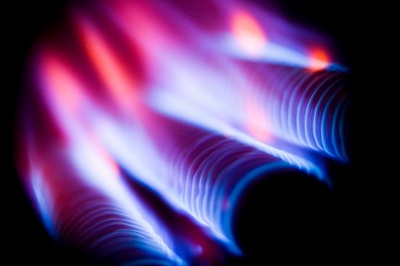 Many of us like to micromanage our thermostat, changing the temperature ever so slightly to our taste, but keep in mind that a furnace essentially operates at two speeds: full power or no power. There is no "medium" or "in-between" setting for when a furnace is actually triggered. Furnaces operate by running at full power whenever the thermostat drops below a set heat level.
An oversized furnace will continually turn on and off in brief, high-energy use intervals, wasting more energy over time than a continuously running furnace. Because of the constant starts and stops, an oversized furnace tends to break down more often. Factor in the possible repair and additional maintenance costs when looking at furnaces that may be too big for your needs.
An undersized furnace will fail to heat your home properly and not only will you be dissatisfied with the performance but you can also expect a higher fuel use. A furnace that’s too small can also depreciate faster and while struggling to heat a home that is too big will begin to wear and tear more than one that is adequate in size.
There is no single identifying rule about the correct size because so many factors must be considered, including:
- Size (square footage) and shape of your home.
- Insulation.
- Window location.
- Air infiltration. (Do your windows leak cold air and are there drafts in your house?)
- Number of occupants.
- Temperature preferences.
Because of these many factors, watchdog groups recommend hiring contractors who use industry standard sizing guides, such as "Manual J Residential Load Calculation."
Watchdog groups also suggest seeking multiple furnaces prices and sizing quotes to ensure you’re buying a new furnace that fits your home.
When shopping for a new furnace and considering the size of a gas furnace or a heat pump, note the British Thermal Units or BTU number for the furnace. BTUs are a measure of heating and cooling energy.
For heating purposes, the higher the BTU, the better since it indicates how much heat the unit produces.
All of the factors listed above, like size of home and number of windows, affect the BTUs once the furnace or heat pump is installed in your home.
In order to estimate how many BTUs you need, first figure out the square footage of your home. The basic formula for calculating the square footage of a square or rectangle is:
- Length x Width = Area
If you have an unusual shaped home or rooms, it’s a completely different formula.
Generally speaking, though, the square footage of your home should be listed in your buyer documents from when you purchased the home. You can also go to such sites as Trulia or Zillow, enter your address, and find your home’s square footage there. The latter method may not provide the most accurate square footage, but it will get you in the ballpark so you can at least figure out what range of furnace you need.
Once you have the total square footage of your home, follow this formula to calculate the furnace or heat pump size you need for extremely cold climates:
- Square footage x 35 = minimum number of BTUs needed
If you live in a milder climate, yet still have heating needs, use this formula:
- Square footage x 25 = minimum number of BTUs needed/li>
Here’s rough estimates at a glance of how many BTUs you may need to heat your home:
- For homes with 1,500 square feet, install furnaces or heat pumps with 37,500 to 52,500 BTUs.
- For homes with 2,000 square feet, install furnaces or heat pumps with 50,000 to 60,000 BTUs.
- For homes with 2,500 square feet, install furnaces or heat pumps with 62,500 to 87,500 BTUs.
If you purchase a high-efficiency furnace with a fantastic AFUE rating, then you might be able to get away with less BTUs. Your HVAC contractor can advise you on which new furnace is best for your home and how many BTUs you need.
What energy tax credits are available?
Industry experts recommend buying furnaces carrying the Energy Star logo, which can mean significantly lower operating costs for your furnace.
Furnaces that meet certain environmental specifications are eligible for significant federal tax credits and, in some states, state tax credits, tax deductions, even favorable financing for installing energy efficient furnaces.
Energy Star bases its furnace approval on the AFUE rating. In order to receive the current energy tax credit of $150 (which includes installation costs), your furnace must have an AFUE rating of 95 percent or higher. The heating and cooling tax credit is only available through Dec. 31, 2013.
For Energy Star approved geothermal heat pumps, you are elgible for a federal tax credit of up to 30 percent. This credit ends on Dec. 31, 2016.
There are also some communities or local, nonprofit organizations that will dispose of your old furnace for free when you elect to purchase or install a new, energy efficient furnace.
These deductions vary and not all Energy Star-certified equipment is eligible for tax credits.
To find out your eligibility, visit Energy Star. To find out about energy efficiency programs in your state, contact your state's Department of Energy or consult your local building inspector.
Furnace prices
 It's difficult to get an accurate report of specific prices for furnaces as most manufacturers will not reveal those prices unless you are a commercial client. Some furnace manufacturers will offer a range of costs for contractors, architects or engineers on a company website. Using a variety of resources, we can offer some guidelines for considering which type of furnace might best fit your budget.
Below is a rundown of some of the most popular options available and the expected price to buy and install a new furnace. The price range include the furnace installation cost, which is subject to quite a bit of fluctuation. Some homes may need new ductwork, which can cost you up to several thousand dollars, while others may already be outfitted for a new furnace.
For more specific prices for your needs and location, follow this link for four free estimates from licensed, verified contractors in your area.
Gas furnaces
- Gas furnace prices: $2,500 to $14,000.
- Recommended for most homes due to the low cost of natural gas.
Oil furnaces
- Oil furnace prices: $2,000 to $8,000; potentially more if the furnace installation requires major modifications.
- Recommended only if a gas furnace is not an option due to lower efficiency and required routine maintenance.
Electric furnaces
- Electric furnace prices: $1,000 to $2,500.
- Recommended only if gas and oil heaters are not an option due to high energy costs, unless used sparsely or to heat a small area.
Heat pumps
- Heat pump prices: $1,500 to $7,000 for air source heat pumps and $7,000 to $25,000 for ground-source heat pumps. Price depends on size, efficiency, location and infrastructure work.
- Recommended for temperate or warm climates, because heat pumps can become inoperable when the outside temperature drops to freezing. Unlike other traditional heating options, which rely on fuel combustion, heat pumps create warmth through a refrigerant that pulls in heat from the outside air, which in some cases can significantly lower energy costs.
- Most heat pumps double as air conditioning units, but are less efficient than a traditional central air conditioner.
Energy savings calculator
 Remember that you're comparing at cost and price when trying to select which furnace is right for your home.
A critical piece of the puzzle before determining the total cost will be to calculate the long-term savings you can expect to enjoy from different efficiency ratings in furnaces that use the same type of energy for fuel.
Here's a fairly simple calculation you can use:
- Multiply your annual energy bill by your old furnace’s efficiency (AFUE) rating (such as 0.75 for an AFUE rating of 75). Divide by the higher efficiency rating in a new furnace (such as 0.85 for an AFUE 85 rating). This will give you your annual savings from an efficiency standpoint.
- Take the cost difference for a more efficient unit (such as $1,000 more for an 85 AFUE-rated furnace) and divide by your annual savings. This will give you the amount of years it’ll take to recoup the difference.
- When considering the annual savings, note the furnace’s expected lifespan. Generally, furnaces last about 20 years.
Where to find HVAC contractors for furnace installation?
Because there are so many factors in determining the cost of a new furnace, experts recommend seeking quotes from multiple HVAC contractors.
The contractor should come to your home and inspect the heating space to determine the proper furnace size. Request an itemized estimate that breaks down the cost of the furnace unit and furnace installation.
Here’s a checklist of what the contractor should provide you and some steps to follow:
Download a PDF of the checklist.
Before you know it, you'll be nice and cozy, with furnace prices far from your thoughts.

Photo credit: 1. 3alexd; 2. FlutterbyPhoto; 3. Orla; 4. nootropa. All art via iStockphoto.

About the Author Rachel Wright
Rachel Wright is an SEO content editor at Reply! with more than 10 years of editing experience. She enjoys interior design and gardening. To share home improvement ideas, find her on Google+.
 © QualitySmith.com. A